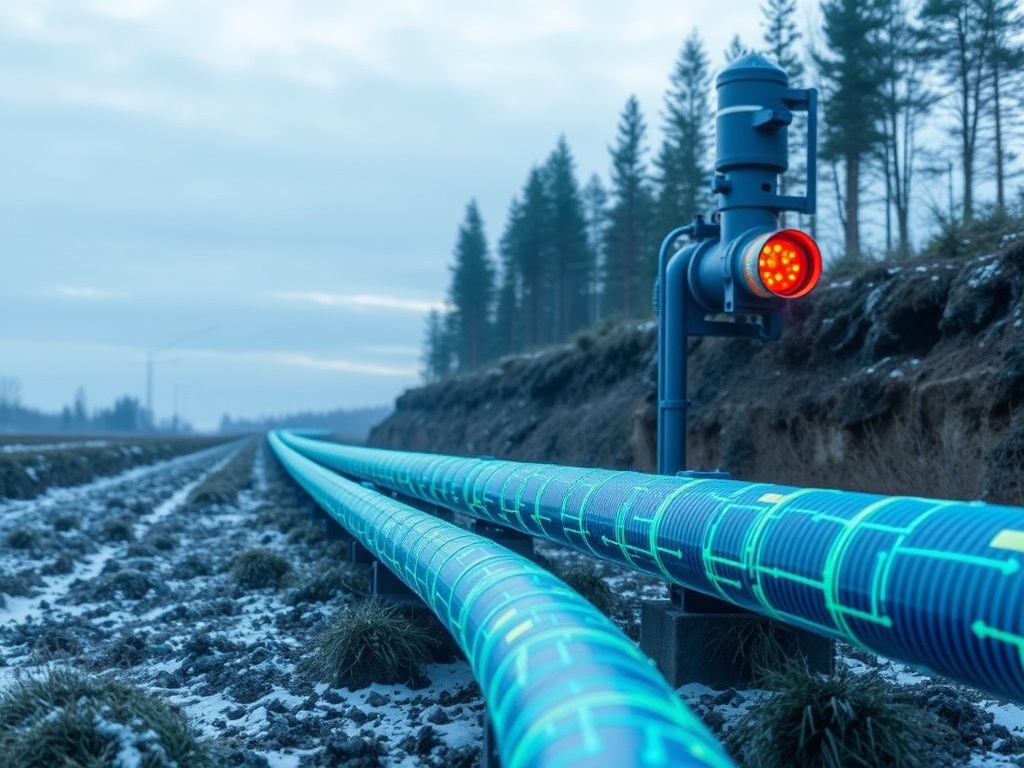
AI Apps for Predicting Natural Gas Pipeline Risks
October 30, 2026
As the world continues to transition towards a cleaner and more sustainable future, the importance of natural gas as a bridging fuel cannot be overstated. With its versatility and abundant supply, natural gas is poised to play a critical role in the global energy landscape for years to come. However, the transportation and distribution of this vital resource pose significant risks that must be mitigated through innovative technologies.
One such technology gaining traction in recent years is Artificial Intelligence (AI). AI-powered applications have revolutionized industries like healthcare, finance, and manufacturing by leveraging machine learning algorithms to analyze complex data patterns. In the context of natural gas pipeline risk prediction, AI apps can help identify potential hazards before they occur, thereby ensuring safer operations and minimizing environmental impacts.
In this article, we will delve into the world of AI-powered apps for predicting natural gas pipeline risks. We will explore the current state-of-the-art in this field, discuss the benefits and challenges of implementing AI-based solutions, and highlight some of the most promising applications being developed today.
Current State-of-the-Art
The importance of predicting natural gas pipeline risks cannot be overstated. The transportation of natural gas through pipelines is a complex process that involves multiple stakeholders, equipment, and environmental factors. With over 2 million miles of pipeline infrastructure in the United States alone, even a minor malfunction can have devastating consequences.
Traditional risk prediction methods rely on human expertise, empirical data, and rule-based systems. These approaches are often limited by their reliance on historical data, which may not accurately capture new or unusual patterns. The increasing complexity of pipeline operations and the need for real-time monitoring have created a pressing need for more advanced predictive analytics tools.
AI-Powered Apps: The Future of Pipeline Risk Prediction
AI-powered apps offer a promising solution to predicting natural gas pipeline risks. These applications leverage machine learning algorithms to analyze vast amounts of data from various sources, including:
- Sensor readings
- Historical incidents
- Environmental factors (e.g., weather patterns)
- Equipment maintenance records
- Pipeline design and construction details
By analyzing these data streams, AI-powered apps can identify patterns and anomalies that may indicate potential risks. These insights can be used to inform decision-making processes, prioritize maintenance activities, and optimize pipeline operations.
Some of the most promising AI-powered apps for predicting natural gas pipeline risks include:
1. Pipeline Risk Assessment (PRA) Tool
Developed by the US Department of Transportation’s Pipeline and Hazardous Materials Safety Administration (PHMSA), the PRA tool is a web-based application that uses machine learning algorithms to assess pipeline risks based on historical incident data, environmental factors, and equipment maintenance records.
2. Gas Transmission Operations Management System (GTOMS)
Developed by the American Gas Association (AGA), GTOMS is an AI-powered platform designed to optimize gas transmission operations. The system uses machine learning algorithms to analyze real-time sensor data, historical incidents, and environmental factors to predict potential risks.
3. Advanced Pipeline Risk Assessment (APRA) Tool
Developed by the University of Texas at Austin’s Center for Petroleum and Geosystems Engineering, APRA is an AI-powered tool that uses machine learning algorithms to assess pipeline risks based on a combination of historical incident data, environmental factors, and equipment maintenance records.
4. Predictive Maintenance (PdM) Solution
Developed by companies like GE Digital and ABB, PdM solutions use machine learning algorithms to analyze sensor data from various sources, including equipment sensors, weather stations, and traffic monitoring systems. These insights can be used to predict potential equipment failures and schedule maintenance activities in advance.
Benefits of AI-Powered Apps
The adoption of AI-powered apps for predicting natural gas pipeline risks offers numerous benefits, including:
- Improved Risk Assessment: AI-powered apps can analyze vast amounts of data to identify patterns and anomalies that may indicate potential risks.
- Enhanced Predictive Capabilities: Machine learning algorithms can be trained on historical incident data to predict potential risks based on similar scenarios.
- Real-Time Monitoring: AI-powered apps can monitor pipeline operations in real-time, enabling swift response to potential incidents.
- Increased Efficiency: AI-powered apps can automate routine tasks, such as sensor data analysis and equipment maintenance scheduling, freeing up human resources for more complex tasks.
Challenges and Limitations
While AI-powered apps offer significant benefits for predicting natural gas pipeline risks, there are also challenges and limitations to consider:
- Data Quality: The accuracy of predictions relies heavily on the quality of input data. Inadequate or incomplete data can lead to inaccurate predictions.
- Complexity: AI-powered apps require complex machine learning algorithms and large datasets, which can be challenging to develop and implement.
- Interpretability: AI-powered apps may produce results that are difficult for humans to interpret, requiring additional expertise to understand the underlying patterns and anomalies.
Conclusion
The transportation and distribution of natural gas pose significant risks that must be mitigated through innovative technologies. AI-powered apps offer a promising solution by leveraging machine learning algorithms to analyze complex data patterns and predict potential pipeline risks.
While there are challenges and limitations associated with implementing AI-based solutions, the benefits they provide in terms of improved risk assessment, enhanced predictive capabilities, real-time monitoring, and increased efficiency make them an attractive option for the natural gas industry.
As we continue to develop and refine AI-powered apps for predicting natural gas pipeline risks, it is essential that we prioritize data quality, complexity, and interpretability. By doing so, we can ensure that these applications are used effectively to minimize risks and optimize operations in the years to come.
References:
- PHMSA (2026). Pipeline Risk Assessment (PRA) Tool.
- AGA (2026). Gas Transmission Operations Management System (GTOMS).
- University of Texas at Austin’s Center for Petroleum and Geosystems Engineering (2026). Advanced Pipeline Risk Assessment (APRA) Tool.
- GE Digital (2026). Predictive Maintenance (PdM) Solution.
- ABB (2026). Predictive Maintenance (PdM) Solution.