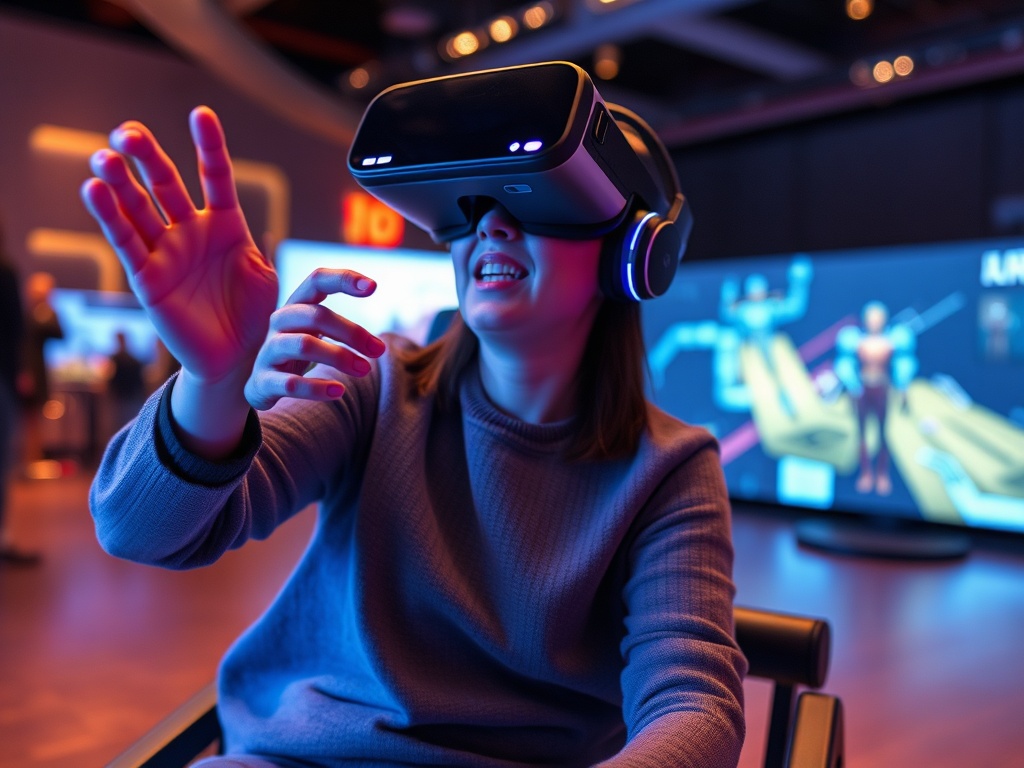
AI Apps for Enhancing the Accessibility of Virtual Reality Gaming
November 21, 2026
As virtual reality (VR) gaming continues to gain popularity, it’s crucial to ensure that this technology is accessible to everyone. With advancements in artificial intelligence (AI), developers can create AI-powered apps that enhance the accessibility of VR gaming for individuals with disabilities. In this article, we’ll explore the current state of AI apps for enhancing VR gaming accessibility and examine the potential benefits and challenges of these innovations.
Current State of AI Apps for Enhancing VR Gaming Accessibility
In recent years, several AI-powered apps have emerged to improve the accessibility of VR gaming for individuals with disabilities. These apps utilize machine learning algorithms to analyze user behavior, detect patterns, and provide personalized assistance. Some notable examples include:
- VRSaver: Developed by the University of California, Los Angeles (UCLA), VRSaver is an AI-powered app that detects and alerts users when they’re about to experience a VR gaming-related injury. By analyzing player behavior and detecting early warning signs, VRSaver can prevent accidents before they occur.
- Eyes-Free VR: This AI-powered app, developed by the University of California, Berkeley, allows individuals with visual impairments to enjoy VR gaming without relying on sighted assistants. Eyes-Free VR utilizes machine learning algorithms to recognize user commands and provide real-time feedback.
Benefits of AI Apps for Enhancing VR Gaming Accessibility
The integration of AI into VR gaming accessibility offers numerous benefits, including:
- Personalized Assistance: AI-powered apps can provide personalized assistance tailored to individual users’ needs, enhancing the overall gaming experience.
- Accident Prevention: AI apps like VRSaver can prevent accidents and injuries related to VR gaming, ensuring a safer and more enjoyable experience for players.
- Increased Inclusivity: AI-powered apps can help bridge the gap between able-bodied and disabled gamers, promoting greater inclusivity within the VR gaming community.
Challenges of AI Apps for Enhancing VR Gaming Accessibility
While AI apps hold great promise in enhancing VR gaming accessibility, there are several challenges that need to be addressed:
- Data Collection: Gathering accurate data on user behavior and preferences is crucial for developing effective AI-powered apps. However, this process can be time-consuming and may require significant resources.
- User Acceptance: Some users might be hesitant to adopt AI-powered apps due to concerns about data privacy or the potential impact of AI on their gaming experience.
- Technical Limitations: Current VR hardware and software limitations can hinder the development of effective AI-powered apps, requiring significant upgrades to fully realize the benefits.
Potential Future Developments
As AI technology continues to advance, we can expect to see further innovations in the realm of VR gaming accessibility. Some potential future developments include:
- Neural Networks: The integration of neural networks into AI-powered apps could lead to more sophisticated personalized assistance and accident prevention.
- Haptic Feedback: Incorporating haptic feedback technology into AI-powered apps could provide users with a more immersive and engaging experience, further enhancing the overall gaming experience.
- Virtual Assistants: Virtual assistants, like Amazon’s Alexa or Google Assistant, could be integrated into VR gaming platforms to provide users with voice-controlled assistance.
Conclusion
As virtual reality gaming continues to evolve, it’s essential that we prioritize accessibility for individuals with disabilities. AI-powered apps have the potential to significantly enhance the accessibility of VR gaming, providing personalized assistance and accident prevention. While challenges remain, the benefits of AI apps far outweigh the costs. As we move forward, it’s crucial that developers continue to innovate and address the technical limitations hindering the widespread adoption of these technologies.
References
- University of California, Los Angeles (UCLA). (n.d.). VRSaver: A Machine Learning-Based System for Preventing VR Gaming-Related Injuries.
- University of California, Berkeley. (n.d.). Eyes-Free VR: An AI-Powered App for Enhancing Accessibility in Virtual Reality Gaming.
Disclaimer
The information provided in this article is intended for general knowledge purposes only and should not be taken as professional advice. The author is not responsible for any damages or losses resulting from the use of AI-powered apps for enhancing virtual reality gaming accessibility.