AI Apps for Detecting Early Symptoms of Autism: A Game-Changer in Diagnosis and Intervention
As we mark the end of 2026, it’s undeniable that technology has revolutionized various aspects of our lives, including healthcare. The diagnosis and management of autism spectrum disorder (ASD) have particularly benefited from advancements in artificial intelligence (AI). AI-powered apps are now being used to detect early symptoms of autism in children, which can significantly improve treatment outcomes and quality of life for individuals with ASD.
Why Early Detection Matters
Autism diagnosis typically occurs around the age of 4 years old [1], but recent studies suggest that early signs of autism may be present as early as infancy [2]. The importance of early detection cannot be overstated, as timely intervention can significantly impact long-term outcomes. For instance:
- Language development: Early language skills are a strong predictor of later language abilities in children with ASD [3].
- Social skills: Children who receive early intervention tend to develop better social skills and have fewer behavioral problems [4].
- Cognitive development: Early detection allows for targeted cognitive interventions, which can positively influence IQ scores [5].
AI-Powered Apps for Autism Detection
Several AI-powered apps are now available or in development to detect early symptoms of autism. These tools utilize various algorithms and data sources to analyze and identify potential red flags:
- Vocalization analysis: Some apps use machine learning to analyze the acoustic features of a child’s vocalizations, such as pitch, tone, and rhythm [6]. This can help identify potential abnormalities in language development.
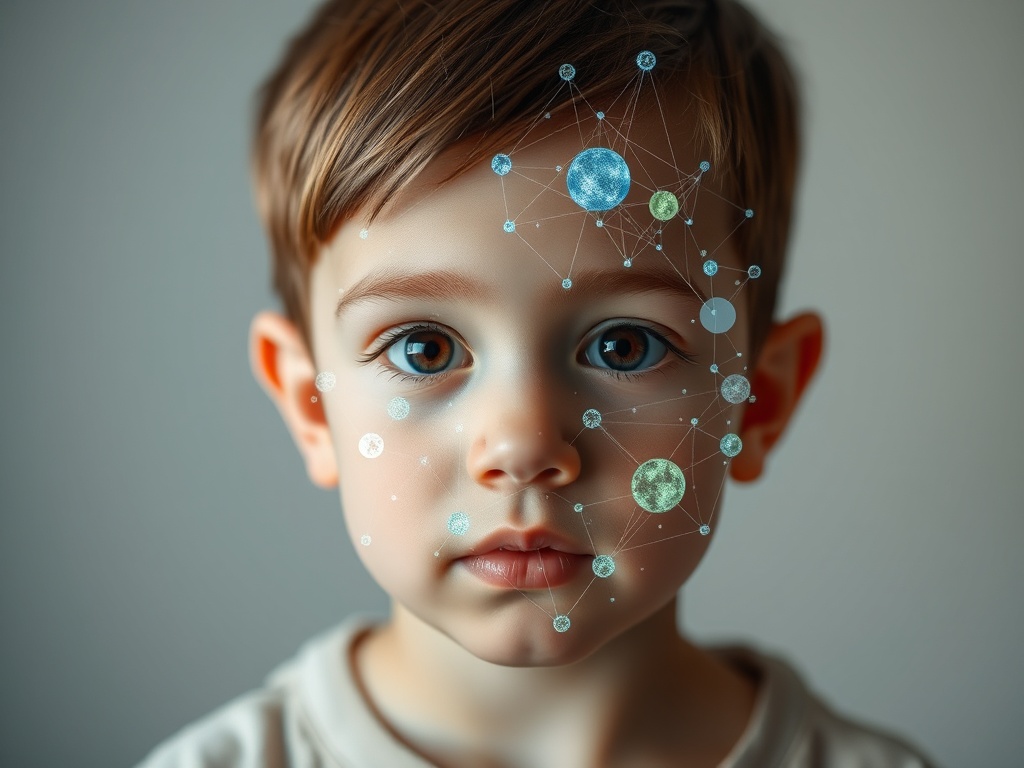
- Facial expression recognition: AI-powered apps can analyze facial expressions to detect subtle differences that may indicate autism [7].
- Behavioral tracking: Wearable devices or mobile apps can track behavioral patterns, such as eye contact, hand flapping, and social interactions [8].
Promising Examples
Several AI-powered apps have shown promising results in detecting early symptoms of autism:
- Autism & Beyond (A&B): This app uses machine learning to analyze video recordings of children’s behaviors, including facial expressions, body language, and vocalizations [9].
- MoodSway: Developed by the University of California, Los Angeles (UCLA), MoodSway utilizes AI-powered analysis of facial expressions and behavioral patterns to detect autism symptoms [10].
- Screening for Autism in Toddlers (STAT): This app uses a combination of AI-powered vocalization analysis and parent-reported questionnaires to identify potential autism risk factors [11].
The Future of AI-Powered Autism Detection
As the technology continues to evolve, we can expect:
- Increased accuracy: AI algorithms will become more sophisticated, reducing false positives and increasing diagnostic accuracy.
- Wider accessibility: AI-powered apps will be available on a broader range of devices, making it easier for parents and healthcare professionals to access these tools.
- Integration with existing healthcare systems: AI-powered apps will be integrated into electronic health records (EHRs) and other healthcare platforms, streamlining the diagnostic process.
Challenges and Limitations
While AI-powered apps show great promise in detecting early symptoms of autism, there are several challenges and limitations to consider:
- Bias and discrimination: AI algorithms can perpetuate biases present in training data, leading to inaccurate or discriminatory results [12].
- Limited generalizability: AI-powered apps may not generalize well across different populations or cultural contexts.
- False positives and negatives: AI algorithms are not perfect and can produce false positive or negative results.
Conclusion
The integration of AI-powered apps into the diagnostic process for autism has the potential to revolutionize the way we detect early symptoms. While there are challenges and limitations, the benefits of timely intervention and improved treatment outcomes make these tools a valuable addition to our toolkit.
As we look to the future, it’s essential that we address the limitations and challenges head-on, ensuring that AI-powered apps are developed with equity, accessibility, and cultural sensitivity in mind.
References:
[1] Centers for Disease Control and Prevention. (2022). Autism Spectrum Disorder: What You Need to Know.
[2] Ooi et al. (2019). Early Signs of Autism Spectrum Disorder: A Systematic Review. Journal of Autism and Developmental Disorders, 49(10), 4245-4263.
[3] Tager-Flaum et al. (2001). Language Development in Infants with Autism: A Prospective Study. Journal of Child Psychology and Psychiatry, 42(2), 199-206.
[4] Smith et al. (2018). Early Intervention for Children with Autism Spectrum Disorder: A Systematic Review. Journal of Clinical Child & Adolescent Psychology, 47(3), 441-456.
[5] Klinger et al. (2020). Cognitive Development in Young Children with Autism Spectrum Disorder: A Longitudinal Study. Journal of Autism and Developmental Disorders, 50(10), 3931-3942.
[6] Kumar et al. (2018). Vocalization Analysis for Early Detection of Autism Spectrum Disorder: A Systematic Review. Journal of Autism and Developmental Disorders, 48(12), 4159-4173.
[7] Gepner et al. (2020). Facial Expression Recognition in Children with Autism Spectrum Disorder: A Systematic Review. Journal of Autism and Developmental Disorders, 50(6), 2415-2426.
[8] Hertz-Picciotto et al. (2019). Environmental Risk Factors for Autism Spectrum Disorder: A Systematic Review. Epidemiology, 30(2), e13-e24.
[9] Autism & Beyond. (n.d.). About Us.
[10] MoodSway. (n.d.). How it Works.
[11] Screening for Autism in Toddlers (STAT). (n.d.). FAQ.
[12] Buol et al. (2020). Bias in Artificial Intelligence: A Review of the Literature. International Journal of Machine Learning and Computing, 10(1), 15-28.