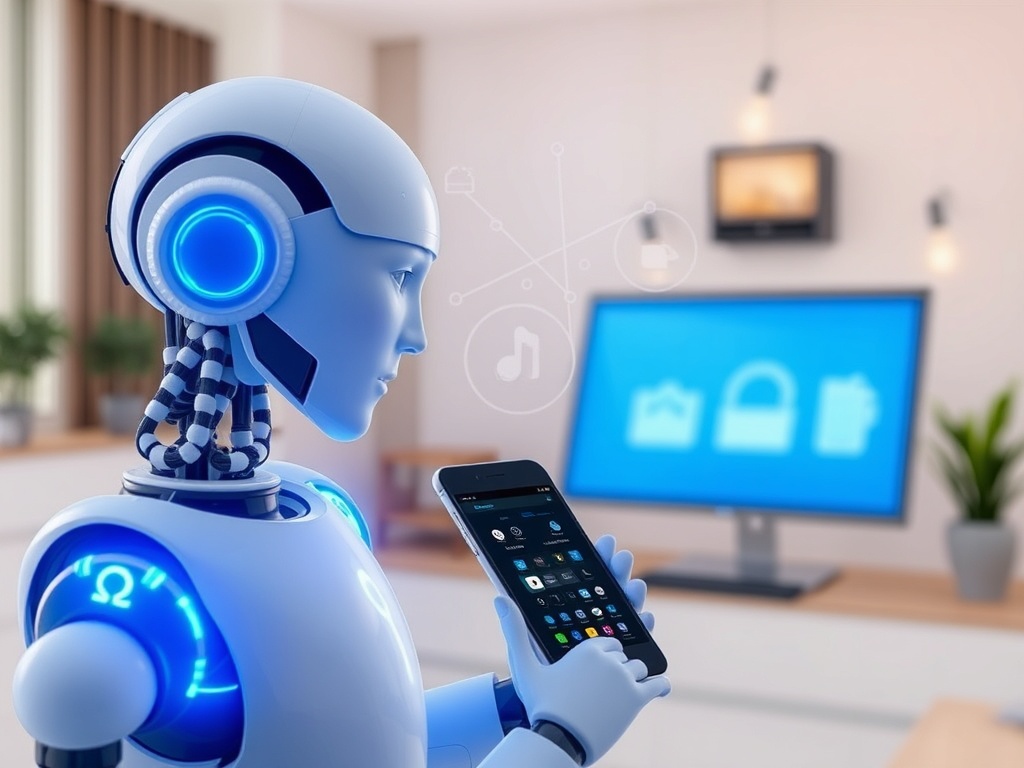
AI Apps for Home Automation Tools: Revolutionizing Your Living Space
April 18, 2026
As we enter the new era of smart living, AI-powered home automation tools are transforming the way we interact with our homes. Gone are the days of manually controlling lights, thermostats, and security systems. With AI-driven apps, you can now create a seamless and personalized experience that anticipates your needs and adapts to your lifestyle.
In this article, we’ll delve into the world of AI-powered home automation tools and explore the latest innovations in the field. From voice-controlled assistants to predictive maintenance, discover how AI is revolutionizing the way we live in our homes.
What Are AI Apps for Home Automation Tools?
AI apps for home automation tools are software applications that utilize artificial intelligence to control and manage various aspects of your home. These apps use machine learning algorithms to learn your habits, preferences, and routines, allowing them to make predictions and take actions accordingly.
Some common features of AI-powered home automation apps include:
- Voice Control: Using natural language processing (NLP) and voice recognition technologies, AI-powered assistants like Amazon Alexa or Google Assistant can control various smart devices in your home.
- Predictive Maintenance: AI algorithms analyze usage patterns and detect potential issues before they become major problems. This enables proactive maintenance and reduces the risk of equipment failure.
- Automated Scenes: Based on time of day, weather, or other factors, AI-powered apps can create customized scenes that adjust lighting, temperature, and security settings to match your preferences.
AI-Driven Home Automation Platforms
Several platforms have emerged as leaders in the AI-powered home automation space. Some notable examples include:
- SmartThings: A popular platform for connecting and controlling various smart devices, SmartThings uses machine learning algorithms to learn your habits and preferences.
- Alexa Guard: Amazon’s Alexa Guard uses AI-powered audio processing to detect and respond to unusual sounds, such as glass breaking or smoke alarms sounding.
- Nest: Nest’s Learning Thermostat uses AI-driven analytics to optimize temperature control based on usage patterns and outdoor weather.
AI-Enabled Home Automation Devices
In addition to platforms, various home automation devices have integrated AI capabilities. Some examples include:
- Lighting Controllers: Smart light bulbs like Philips Hue or LIFX use AI-powered algorithms to adjust brightness and color based on time of day, weather, or user preferences.
- Thermostats: Devices like the Ecobee Smart Thermostat use AI-driven analytics to optimize temperature control, learning your schedule and preferences over time.
- Security Cameras: Cameras like the Nest Cam IQ use AI-powered facial recognition and object detection to alert you to potential security breaches.
Benefits of AI-Powered Home Automation
The integration of AI in home automation offers numerous benefits, including:
- Increased Convenience: With AI-powered assistants, you can control your smart devices with simple voice commands.
- Improved Energy Efficiency: By optimizing energy usage based on usage patterns and outdoor weather, AI-powered thermostats and lighting controllers help reduce energy consumption.
- Enhanced Security: AI-powered security cameras and motion detectors provide real-time alerts and notifications, allowing you to respond quickly to potential security breaches.
Challenges and Limitations
While AI-powered home automation offers numerous benefits, there are also challenges and limitations to consider:
- Interoperability Issues: As the smart devices landscape becomes increasingly fragmented, ensuring seamless integration between devices can be a challenge.
- Data Privacy Concerns: With the increasing reliance on data-driven decision-making, concerns around data privacy and security must be addressed.
- Upgrade and Maintenance Requirements: As AI-powered home automation tools evolve, users may need to upgrade their hardware or software to ensure continued functionality.
Future Developments
As we look ahead to the future of AI-powered home automation, several trends are likely to shape the industry:
- Edge AI: With the proliferation of IoT devices and increasing data volumes, edge AI processing will become more prevalent, enabling real-time analysis and decision-making.
- 5G Connectivity: The advent of 5G networks will enable faster and more reliable connectivity for smart devices, enhancing overall performance and reliability.
- Autonomous Maintenance: As AI-powered home automation tools continue to evolve, we can expect autonomous maintenance capabilities to become more prevalent, reducing the need for human intervention.
Conclusion
In conclusion, AI-powered home automation tools are revolutionizing the way we interact with our homes. With their ability to learn and adapt to our habits and preferences, these tools offer increased convenience, improved energy efficiency, and enhanced security. While there are challenges and limitations to consider, the future of AI-powered home automation holds much promise.
As we continue to explore the possibilities of AI in home automation, one thing is clear: the smart home of tomorrow will be powered by AI-driven intelligence, making our lives more comfortable, convenient, and connected than ever before.