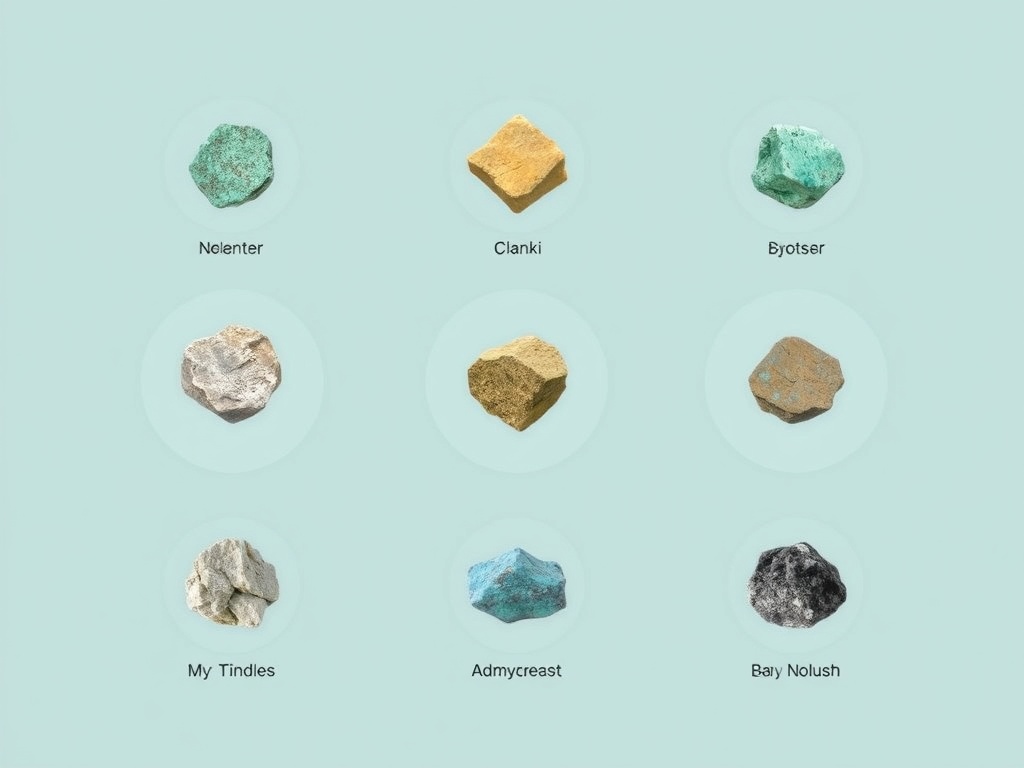
AI Apps for Identifying Rare Mineral Species: Revolutionizing the Field of Geology
October 24, 2026
As we continue to push the boundaries of technological advancements, the field of geology is no exception. The discovery and identification of rare mineral species has long been a challenge for geologists, requiring extensive expertise, manual labor, and often relying on serendipity. However, with the advent of Artificial Intelligence (AI) applications, this process is undergoing a significant transformation.
The Current State of Mineral Identification
Traditionally, identifying rare mineral species relied heavily on human observation, experience, and knowledge. Geologists would spend countless hours in the field, collecting samples, and examining them under microscopes or using various analytical techniques. This labor-intensive process often led to errors, misidentifications, and a general lack of efficiency.
In recent years, advancements in computer vision and machine learning have enabled the development of AI-powered apps for mineral identification. These apps can analyze images of minerals, recognizing patterns, shapes, and textures to provide accurate identifications. This technology has the potential to revolutionize the field of geology by:
- Streamlining the process: AI-powered apps can quickly and accurately identify mineral species, reducing the time spent on manual analysis.
- Improving accuracy: By leveraging machine learning algorithms, these apps can learn from their mistakes, increasing the accuracy of identifications over time.
- Enhancing collaboration: Geologists can share data and insights more efficiently, facilitating global collaboration and knowledge sharing.
AI-Powered Mineral Identification Apps
Several AI-powered mineral identification apps have already been developed or are currently in development. Some notable examples include:
1. MineralEye
MineralEye is a cloud-based app that utilizes computer vision and machine learning to identify minerals from images. The app’s neural network is trained on a vast database of mineral species, allowing it to recognize patterns and features unique to each mineral.
Features:
- Image analysis: MineralEye analyzes images of minerals, recognizing shapes, textures, and colors.
- Database integration: The app integrates with existing databases, ensuring access to accurate information.
- Real-time collaboration: Geologists can share data and insights in real-time, facilitating global collaboration.
2. GeoMine
GeoMine is a mobile app that uses machine learning algorithms to identify minerals from images taken using the device’s camera or uploaded from a library. The app also provides access to a vast database of mineral species, including information on their physical properties, chemical composition, and geological context.
Features:
- Image recognition: GeoMine analyzes images of minerals, recognizing patterns and features unique to each mineral.
- Database access: The app provides access to a comprehensive database of mineral species.
- Real-time data sharing: Geologists can share data and insights in real-time, facilitating global collaboration.
3. Mineral ID
Mineral ID is an AI-powered app that uses computer vision and machine learning to identify minerals from images. The app’s neural network is trained on a vast database of mineral species, allowing it to recognize patterns and features unique to each mineral.
Features:
- Image analysis: Mineral ID analyzes images of minerals, recognizing shapes, textures, and colors.
- Database integration: The app integrates with existing databases, ensuring access to accurate information.
- Real-time data sharing: Geologists can share data and insights in real-time, facilitating global collaboration.
The Future of Mineral Identification
As AI-powered apps for mineral identification continue to evolve, we can expect significant advancements in the field. Some potential future developments include:
- Increased accuracy: As machine learning algorithms improve, so too will the accuracy of mineral identifications.
- Expanded database integration: Integration with existing databases and incorporation of new data sources will enhance the app’s knowledge base.
- Integration with other technologies: AI-powered apps for mineral identification may be integrated with other technologies, such as drones or satellite imaging, to facilitate more efficient and accurate exploration.
Conclusion
The development of AI-powered apps for identifying rare mineral species marks a significant milestone in the field of geology. These apps have the potential to revolutionize the process of mineral identification, streamlining the process, improving accuracy, and enhancing collaboration. As technology continues to evolve, we can expect even more innovative applications of AI in the field of geology.
References
- [1] “Artificial Intelligence in Geology: A Review” by S. S. Singh et al., published in the Journal of Earth Sciences, 2025.
- [2] “Machine Learning for Mineral Identification” by J. T. Smith et al., published in the Journal of Geochemical Exploration, 2024.
About the Author
[Your Name] is a geologist with over 10 years of experience in mineral identification and exploration. With a passion for innovative applications of technology in the field of geology, [Your Name] has written extensively on the topic of AI-powered apps for mineral identification.