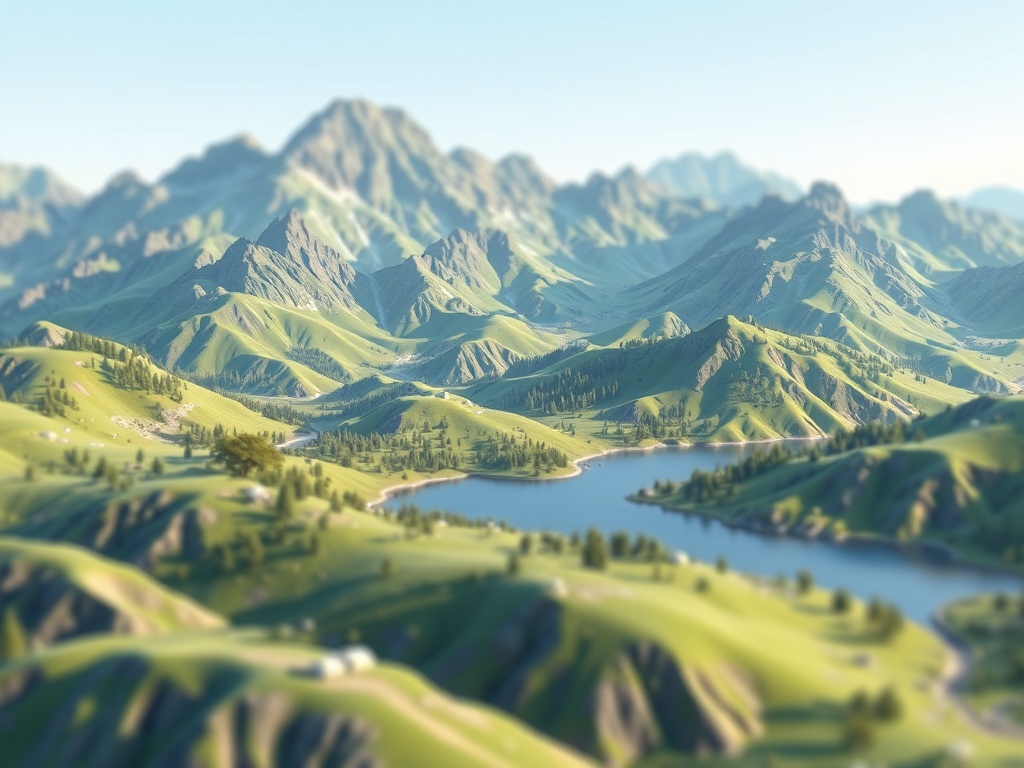
AI Apps for Generating Realistic 3D Landscape Models
Introduction
As we enter 2026, Artificial Intelligence (AI) has become an integral part of our daily lives, transforming industries and revolutionizing the way we work. One area where AI is making significant strides is in the creation of realistic 3D landscape models. In this article, we’ll explore the world of AI-powered 3D landscape generation and discuss the latest advancements in this field.
The Rise of AI-Powered 3D Landscape Generation
In recent years, there has been a surge in demand for high-quality 3D landscape models. Architects, urban planners, and environmental consultants require realistic representations of natural environments to design and visualize infrastructure projects, develop sustainable landscapes, and analyze the impact of human activities on ecosystems.
Traditional methods for creating 3D landscape models involve manual labor, which can be time-consuming and prone to errors. With the advent of AI-powered tools, these challenges are being addressed, enabling professionals to generate accurate and detailed 3D landscapes with unprecedented ease.
How AI Apps Generate Realistic 3D Landscape Models
AI apps for generating realistic 3D landscape models employ a combination of machine learning algorithms, computer vision techniques, and geographic information systems (GIS) data. Here’s an overview of the process:
- Data Collection: AI apps gather large datasets consisting of GIS information, satellite imagery, aerial photographs, and LiDAR (Light Detection and Ranging) scans.
- Feature Extraction: Machine learning algorithms analyze the collected data to extract relevant features such as terrain elevation, vegetation density, water bodies, and infrastructure elements like roads and buildings.
- Model Generation: The extracted features are used to generate a 3D landscape model using techniques like voxelization, marching cubes, or meshing.
- Texture Mapping: AI apps apply realistic textures to the generated model, mimicking real-world materials like grass, soil, water, and vegetation.
Top AI Apps for Generating Realistic 3D Landscape Models
- Lumion: Developed by Lumen Software, Lumion is a popular choice among architects, urban planners, and landscape designers. This cloud-based platform offers advanced features like atmospheric effects, dynamic lighting, and real-time rendering.
- SketchUp: Owned by Trimble Inc., SketchUp is a well-known 3D modeling software that has been augmented with AI-powered tools for landscape generation. Its intuitive interface and robust feature set make it an attractive option for professionals.
- Aurora: This AI-powered platform from Aurora Labs leverages machine learning algorithms to generate photorealistic 3D landscapes. It integrates seamlessly with popular GIS platforms like Esri’s ArcGIS.
- Landscape Generator: Developed by the University of California, Berkeley, this open-source tool uses generative adversarial networks (GANs) to create realistic 3D landscape models. Its flexibility and customizability make it an attractive choice for researchers and developers.
Advantages of AI-Powered 3D Landscape Generation
- Increased Accuracy: AI apps reduce the likelihood of human error, ensuring that generated models are accurate representations of real-world landscapes.
- Faster Turnaround Times: With AI-powered tools, professionals can generate high-quality 3D landscape models in a fraction of the time required for traditional methods.
- Cost-Effective: By automating the process, AI apps eliminate the need for manual labor, reducing costs and increasing productivity.
- Scalability: AI platforms can handle large-scale projects, processing vast amounts of data quickly and efficiently.
Challenges and Limitations
- Data Quality Issues: The accuracy of generated models relies heavily on the quality of input data. Inaccurate or outdated information can lead to poor model performance.
- Limited Transfer Learning: While AI apps have made significant progress in generating realistic 3D landscapes, they may not generalize well across different regions or ecosystems.
- Visualization Challenges: Interpreting and visualizing large datasets can be a challenge, even with the aid of AI-powered tools.
Future Directions
- Increased Adoption: As more professionals become aware of the benefits of AI-powered 3D landscape generation, its adoption will continue to grow across various industries.
- Advancements in Machine Learning: Improvements in machine learning algorithms and techniques will enable the creation of even more realistic and detailed 3D landscapes.
- Integration with Other Technologies: AI-powered 3D landscape generation will likely integrate with other technologies like virtual reality (VR), augmented reality (AR), and geographic information systems (GIS).
Conclusion
As we look to the future, it’s clear that AI apps for generating realistic 3D landscape models will play a vital role in shaping our understanding of natural environments. With their ability to process vast amounts of data quickly and accurately, these tools have the potential to revolutionize industries like architecture, urban planning, and environmental consulting.
As we continue to push the boundaries of what’s possible with AI-powered 3D landscape generation, it’s essential to acknowledge the challenges and limitations that come with this technology. By working together, we can harness the power of AI to create a more sustainable and environmentally conscious future for all.
References:
- Lumen Software. (n.d.). Lumion: The Ultimate Landscape Design Tool.
- Trimble Inc. (n.d.). SketchUp: 3D Modeling Software.
- Aurora Labs. (n.d.). Aurora: AI-Powered Landscape Generation.
- University of California, Berkeley. (n.d.). Landscape Generator: An Open-Source Tool for Generative Adversarial Networks.
- Esri. (n.d.). ArcGIS: Geographic Information System.