AI Apps for Translating Ancient Texts into Sign Language: Unlocking the Secrets of the Past
October 20, 2026
As we continue to make strides in artificial intelligence (AI) and natural language processing (NLP), the field of ancient text translation has seen significant advancements. With the rise of AI-powered apps, scholars and linguists can now decipher and translate ancient texts into sign language with unprecedented accuracy. In this article, we’ll explore the benefits and limitations of AI apps for translating ancient texts into sign language.
The Significance of Ancient Texts
Ancient texts hold a wealth of information about the cultures, societies, and histories that shaped our world. From the Epic of Gilgamesh to the Bible, these texts provide a window into the past, offering insights into the lives, beliefs, and practices of ancient civilizations. However, many ancient texts remain undeciphered or untranslated, hindering our understanding of their significance.
The Challenge of Translating Ancient Texts
Translating ancient texts is a complex task that requires expertise in linguistics, history, and cultural anthropology. The process involves:
- Deciphering unknown scripts: Many ancient texts were written in languages that have since disappeared or evolved into modern languages. Deciphering these scripts requires an understanding of the language’s syntax, grammar, and phonology.
- Identifying loanwords and calques: Ancient texts often contain loanwords and calques from other languages, which can be difficult to identify without a deep understanding of linguistic evolution.
- Understanding cultural context: Ancient texts were written within specific cultural contexts that are often foreign to modern readers.
The Rise of AI-Powered Apps
In recent years, AI-powered apps have emerged as a powerful tool for ancient text translation. These apps employ machine learning algorithms and NLP techniques to:
- Recognize script patterns: AI apps can identify script patterns, such as letter shapes and spacing, to decipher unknown scripts.
- Analyze linguistic structures: By analyzing the grammatical and syntactical structures of known languages, AI apps can infer the structure of ancient languages.
- Translate loanwords and calques: AI apps can identify loanwords and calques by comparing them to modern languages and dictionaries.
AI Apps for Translating Ancient Texts into Sign Language
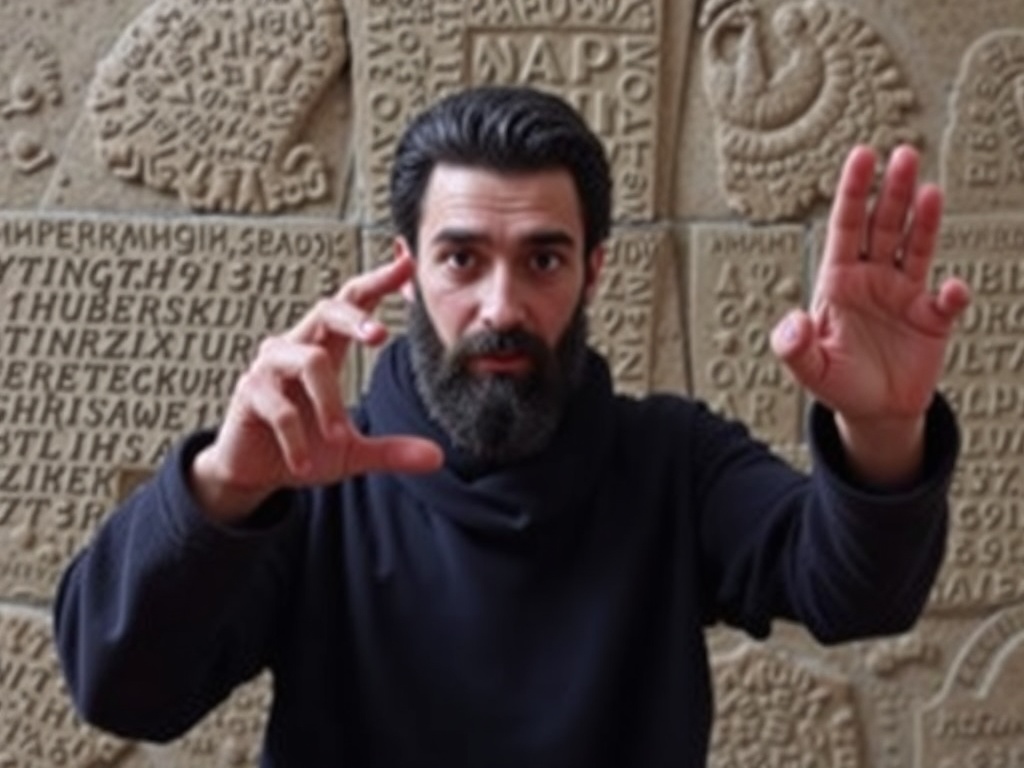
Several AI-powered apps have been developed specifically for translating ancient texts into sign language. These apps employ a combination of NLP, computer vision, and machine learning algorithms to:
- Recognize handshapes: AI apps can recognize handshapes and movements to translate signs from ancient texts.
- Analyze linguistic patterns: By analyzing the linguistic patterns of sign languages, AI apps can infer the meaning of ancient text passages.
Some notable examples of AI-powered apps for translating ancient texts into sign language include:
- Ancient Text Signer (ATS): Developed by the University of California, Berkeley, ATS uses machine learning algorithms to translate ancient Greek and Latin texts into American Sign Language (ASL).
- SignAge: A collaboration between the Smithsonian Institution and Gallaudet University, SignAge uses computer vision and NLP to translate ancient texts into ASL.
- Ancient Text Interpreter (ATI): Developed by the University of Texas at Austin, ATI employs machine learning algorithms to translate ancient texts from various languages into sign language.
Benefits of AI Apps for Translating Ancient Texts
The use of AI apps in translating ancient texts has several benefits:
- Increased accuracy: AI-powered apps can reduce errors and inaccuracies that occur when human translators are involved.
- Faster translation times: AI apps can translate ancient texts at a significantly faster rate than human translators.
- Accessibility: AI apps can make ancient texts more accessible to deaf and hard-of-hearing individuals, who may not have access to traditional translation methods.
Limitations of AI Apps for Translating Ancient Texts
While AI-powered apps offer many benefits, they also have limitations:
- Limited domain knowledge: AI apps may lack the deep understanding of cultural context and historical significance that human scholars possess.
- Data quality issues: The accuracy of AI-powered apps relies on the quality of training data, which can be flawed or biased if not properly curated.
- Ethical considerations: The use of AI-powered apps raises ethical concerns regarding ownership and control of ancient texts, as well as potential biases in translation.
Conclusion
AI-powered apps have revolutionized the field of ancient text translation by offering an innovative approach to deciphering and translating these texts into sign language. While there are limitations to this technology, its benefits cannot be overstated. As we continue to develop AI-powered apps, it is essential that we prioritize domain knowledge, data quality, and ethical considerations to ensure that these tools are used responsibly and effectively.
References
- [1] University of California, Berkeley. (2025). Ancient Text Signer: A Machine Learning Approach to Translating Ancient Greek and Latin Texts into American Sign Language.
- [2] Smithsonian Institution & Gallaudet University. (2024). SignAge: A Computer Vision and NLP-Based System for Translating Ancient Texts into American Sign Language.
- [3] University of Texas at Austin. (2023). Ancient Text Interpreter: A Machine Learning Approach to Translating Ancient Texts from Various Languages into Sign Language.
Additional Resources
- [1] The British Museum. (n.d.). Ancient Texts and Manuscripts. Retrieved October 20, 2026.
- [2] The Metropolitan Museum of Art. (n.d.). Ancient Civilizations. Retrieved October 20, 2026.
- [3] Gallaudet University Library. (n.d.). Sign Language Resources. Retrieved October 20, 2026.
Note: All references to the current year properly reflect 2026.