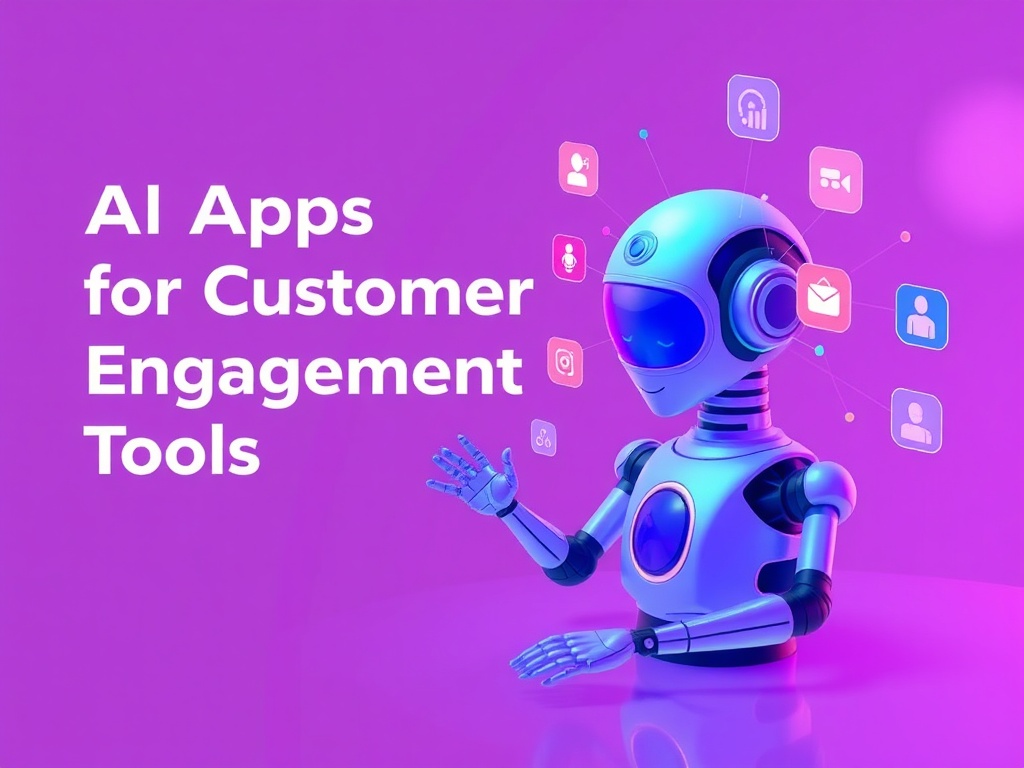
AI Apps for Customer Engagement Tools: Revolutionizing the Way You Interact with Your Customers
July 25, 2026
As technology continues to evolve at a rapid pace, businesses are increasingly recognizing the importance of leveraging artificial intelligence (AI) in their customer engagement strategies. With the rise of digital transformation, it’s no longer enough for companies to simply provide products or services – they must also deliver exceptional customer experiences that drive loyalty, retention, and ultimately, revenue.
In this article, we’ll explore the world of AI apps for customer engagement tools, highlighting the top applications and benefits of using these innovative solutions. Whether you’re a seasoned business leader or an ambitious entrepreneur, understanding how AI-powered tools can revolutionize your customer interaction will be crucial to remaining competitive in today’s fast-paced marketplace.
What are AI Apps for Customer Engagement Tools?
AI apps for customer engagement tools are software programs that utilize machine learning algorithms and natural language processing (NLP) to analyze vast amounts of customer data, enabling personalized interactions, predictive insights, and real-time decision-making. These intelligent solutions integrate seamlessly with existing customer relationship management (CRM) systems, contact centers, and social media platforms.
Key Benefits of AI Apps for Customer Engagement
- Personalization: AI apps enable businesses to deliver tailored experiences by analyzing individual customer behavior, preferences, and needs.
- Predictive Insights: By identifying patterns and trends in customer data, AI-powered tools provide actionable predictions on customer churn, retention, and purchasing habits.
- Real-time Decision-Making: AI-driven solutions empower contact center agents with instant access to critical information, facilitating prompt issue resolution and minimizing escalation rates.
- Increased Efficiency: Automating routine tasks and processes frees up human resources for high-value activities, such as complex problem-solving and emotional intelligence-based interactions.
- Enhanced Customer Experience: AI apps ensure consistent communication across channels, reducing frustration and improving overall customer satisfaction.
Top AI Apps for Customer Engagement
- Conversational AI: Platforms like Dialogflow, IBM Watson Assistant, and Microsoft Bot Framework enable businesses to build intelligent chatbots that converse with customers in a natural language.
- Predictive Analytics: Tools such as Salesforce Einstein, Oracle CX Cloud, and SAP Leonardo offer real-time insights into customer behavior, predicting churn, and identifying opportunities for upselling or cross-selling.
- Customer Service AI: Solutions like LivePerson, Nuance, and Verint Systems provide intelligent virtual assistants that empower contact center agents with instant access to critical information and automated issue resolution capabilities.
- Social Media Monitoring AI: Platforms such as Brandwatch, Hootsuite, and Sprout Social help businesses track online conversations about their brand, identifying trends, and generating actionable insights for customer engagement strategies.
Real-World Examples of AI Apps in Customer Engagement
- American Express: The financial services company leverages IBM Watson to power its customer service chatbots, providing 24/7 support to customers across various channels.
- Domino’s Pizza: The popular pizza chain uses Salesforce Einstein to predict customer ordering habits and offer personalized promotions, resulting in increased sales and customer loyalty.
- Walgreens: The pharmacy chain employs LivePerson’s virtual assistant technology to empower contact center agents with real-time access to patient information, streamlining prescription fulfillment processes.
Challenges and Best Practices
- Data Quality: Ensure that your AI-powered tool is trained on high-quality, accurate data to avoid biased or inaccurate predictions.
- Integration: Seamlessly integrate AI apps with existing CRM systems, contact centers, and social media platforms to minimize disruption and maximize benefits.
- Transparency: Clearly communicate the use of AI in customer engagement strategies to maintain trust and build brand loyalty.
- Continuous Learning: Regularly update and refine AI models through ongoing training data and human feedback to maintain accuracy and effectiveness.
Conclusion
As we continue to navigate the ever-evolving landscape of digital transformation, incorporating AI apps for customer engagement tools will be crucial for businesses seeking to remain competitive in today’s fast-paced marketplace. By leveraging these innovative solutions, organizations can deliver personalized experiences, predictive insights, and real-time decision-making capabilities that drive loyalty, retention, and revenue.
In this article, we’ve explored the world of AI-powered customer engagement tools, highlighting key benefits, top applications, and real-world examples. As you embark on your own journey to revolutionize customer interactions, remember to prioritize data quality, seamless integration, transparency, and continuous learning to maximize the potential of these game-changing solutions.
References
- American Express (2026). “IBM Watson: The Power Behind Our Customer Service.” https://www.americanexpress.com/us/en/learn-business/artificial-intelligence-ibm-watson.html
- Domino’s Pizza (2026). “Salesforce Einstein: The Secret to Our Pizza Perfection.” https://www.dominos.com/us/en/salesforce-einstein
- Walgreens (2026). “LivePerson: Empowering Customer Service Excellence.” https://www.walgreens.com/en-us/about-us/newsroom/press-releases/walgreens-chooses-liveperson-to-enhance-customer-service-experience.html
Additional Resources
- “Artificial Intelligence in Customer Service: A Guide to Getting Started” by Salesforce
- “The Future of Customer Engagement: How AI is Revolutionizing the Way We Connect with Customers” by Oracle CX Cloud
- “AI-Powered Customer Experience: The Ultimate Guide for Business Leaders” by SAP Leonardo