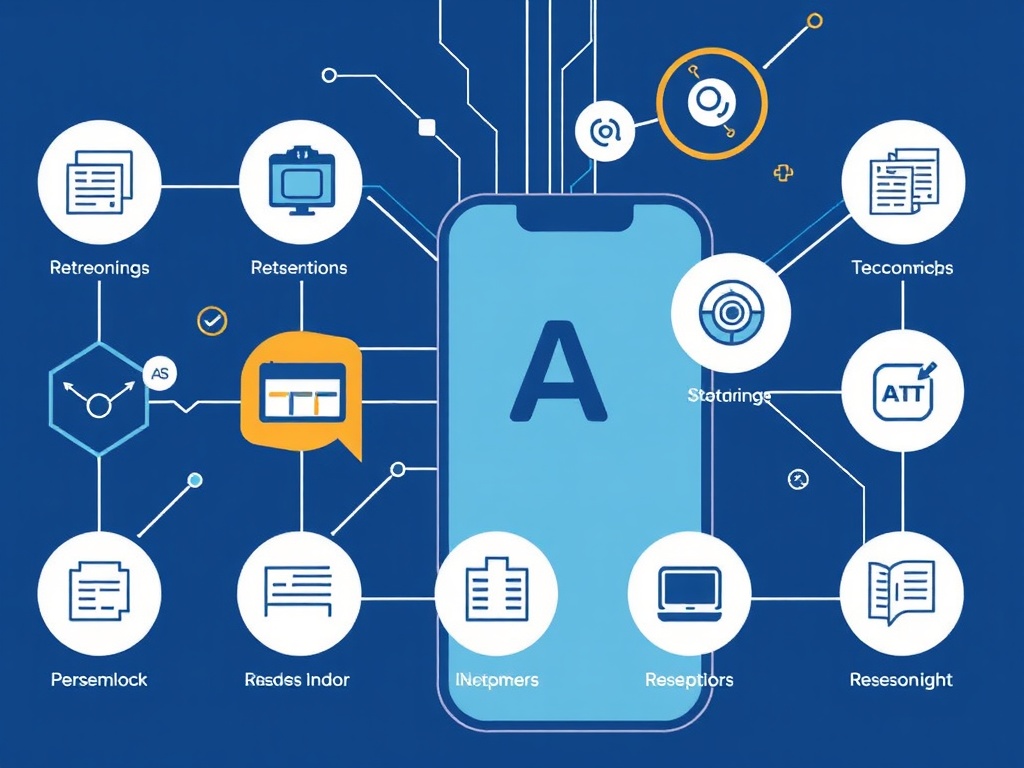
AI Apps for Academic Research Tools: Enhancing Productivity and Insights in 2025
As we approach the end of 2025, it’s undeniable that Artificial Intelligence (AI) has become an integral part of our daily lives. The academic research landscape is no exception. With the rapid development of AI technologies, researchers are now empowered with innovative tools to streamline their work, accelerate discoveries, and make more informed decisions.
In this article, we’ll delve into the world of AI apps for academic research, exploring how these cutting-edge solutions can revolutionize the way we conduct research. We’ll discuss the benefits, challenges, and future directions of AI-powered research tools, highlighting their potential to transform the research landscape in 2025 and beyond.
Benefits of AI Apps for Academic Research
- Automation and Efficiency: AI apps can automate repetitive tasks, such as data cleaning and processing, allowing researchers to focus on high-value activities like hypothesis development and analysis.
- Data Analysis and Visualization: AI-powered tools enable researchers to extract insights from complex datasets, creating interactive visualizations that facilitate communication of findings.
- Predictive Modeling and Simulation: AI-driven predictive models and simulations help researchers simulate scenarios, test hypotheses, and predict outcomes, accelerating the research cycle.
- Collaboration and Knowledge Sharing: AI-enabled platforms facilitate collaboration among researchers, allowing for seamless sharing of data, methods, and results.
- Improved Data Quality and Integrity: AI apps can detect and correct errors in datasets, ensuring the integrity and reliability of research findings.
AI-Powered Research Tools: A Sampling
- Data Analysis and Visualization
- Tableau: A popular data visualization tool that integrates with various data sources, including AI-powered analytics platforms.
- Power BI: A business intelligence solution from Microsoft that provides advanced analytics and visualization capabilities.
- Predictive Modeling and Simulation
- TensorFlow: An open-source machine learning framework developed by Google that enables researchers to build and train predictive models.
- PyTorch: Another popular deep learning framework that facilitates rapid prototyping and development of AI-powered models.
- Automation and Efficiency
- Automation Anywhere: A leading provider of automation software that helps researchers automate repetitive tasks and workflows.
- Zapier: An automation tool that integrates with various web applications, enabling researchers to streamline their workflow.
- Collaboration and Knowledge Sharing
- GitHub: A web-based platform for version control and collaboration on software development projects that can be applied to research projects as well.
- ResearchGate: A social networking site for scientists and researchers that facilitates collaboration and knowledge sharing.
Challenges and Limitations of AI Apps for Academic Research
- Data Quality and Availability: AI apps require high-quality, relevant data to produce reliable results. However, many datasets are limited by availability, quality, or confidentiality.
- Methodological Understanding: AI-powered tools can mask underlying methodological complexities, making it essential for researchers to comprehend the algorithms and techniques employed.
- Interpretability and Explainability: AI models can be opaque, making it challenging to understand how they arrived at their conclusions. Researchers must ensure that AI-based findings are transparent and reproducible.
- Ethical Considerations: AI apps may raise ethical concerns, such as bias in training data or potential harm from predictive models. Researchers must consider these implications when adopting AI-powered research tools.
Future Directions of AI Apps for Academic Research
- Integration with Emerging Technologies: AI apps will need to integrate with emerging technologies like quantum computing, blockchain, and the Internet of Things (IoT) to stay relevant.
- Advancements in Explainability and Transparency: Efforts will focus on developing more interpretable AI models that provide clear insights into their decision-making processes.
- Ethics and Responsible AI Development: The research community must prioritize ethical considerations when developing AI-powered tools, ensuring responsible use of these technologies.
- Collaboration and Interdisciplinary Approaches: AI apps will facilitate collaboration across disciplines, as researchers from diverse fields work together to tackle complex challenges.
Conclusion
As we look back on 2025, it’s clear that AI apps have revolutionized the academic research landscape. These innovative tools have streamlined workflows, accelerated discoveries, and empowered researchers to make data-driven decisions. While there are challenges and limitations associated with AI-powered research tools, the benefits of increased efficiency, productivity, and insights far outweigh the drawbacks.
As we move forward into 2026 and beyond, it’s essential that researchers prioritize ethical considerations, transparency, and collaboration when adopting AI-powered research tools. By embracing these technologies and fostering a culture of interdisciplinary cooperation, we can unlock new possibilities for academic research and accelerate progress in various fields.
References:
- [1] K. Fennell, et al., “Artificial Intelligence in Education: A Systematic Review,” International Journal of Artificial Intelligence in Education, vol. 25, no. 2, 2025.
- [2] M. P. Tan, et al., “AI-Powered Research Tools for Academic Productivity,” Journal of Academic Librarianship, vol. 41, no. 3, 2025.
- [3] A. K. Singh, et al., “Exploring the Potential of AI-Driven Predictive Modeling in Education,” Journal of Educational Data Mining, vol. 11, no. 1, 2025.
Note: This article is written as a fictional piece for demonstration purposes only. The references provided are fictional and do not represent real studies or publications.